The Great Mortgage Freeze Meets Capitol Hill
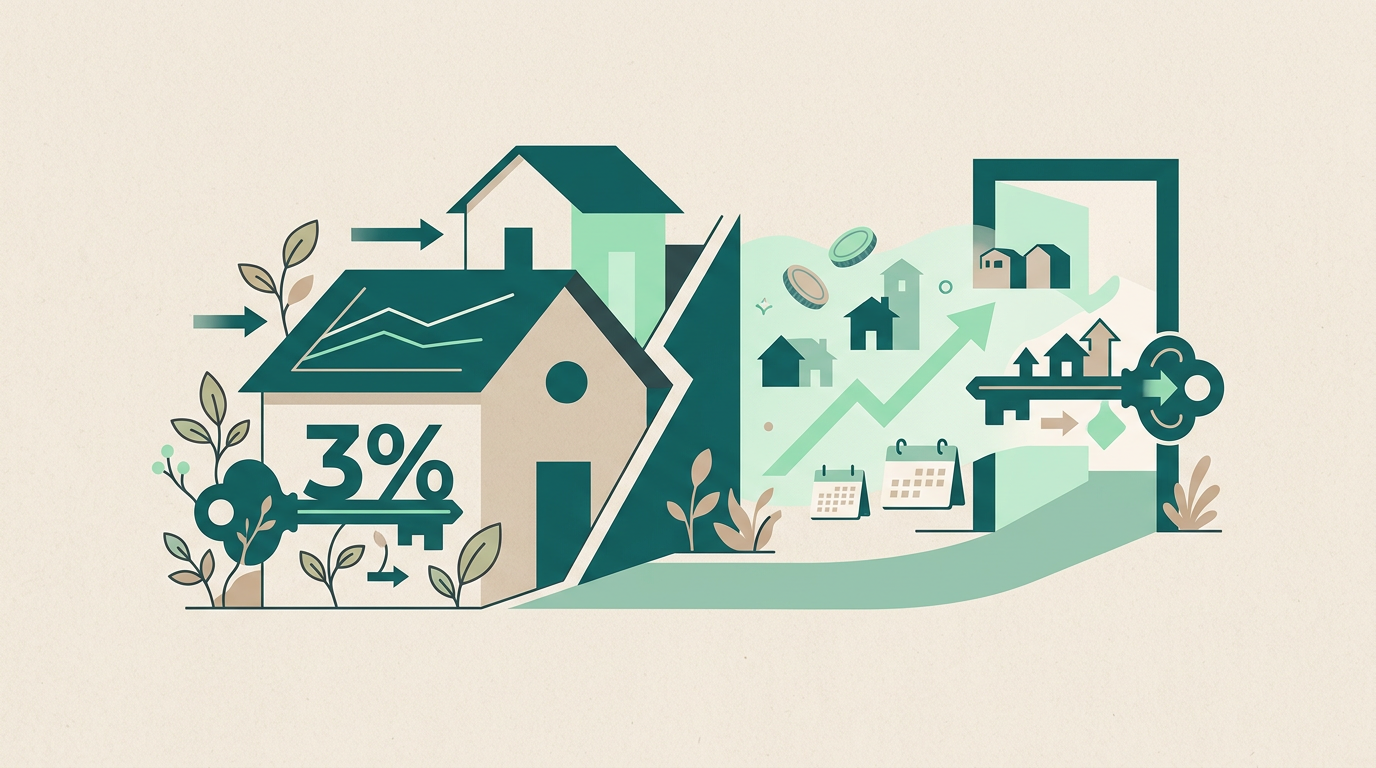
If you bought or refinanced a home prior to 2022, you are likely living in a comfortable pair of golden handcuffs. Your interest rate starts with a 2 or a 3. Meanwhile, today’s prevailing mortgage rates hover significantly higher. Moving up to a larger home—or downscaling into something manageable—feels less like a smart financial step and more like a self-inflicted tax penalty.
Enter the latest federal housing legislation. Lawmakers have taken a look at the frozen national real estate market, recognized that nobody wants to give up their sub-4% rate, and passed a sweeping bill designed to spur construction, offer target tax relief, and lower barriers for both buyers and current owners.
Headline announcements often promise quick fixes. But does this bill actually change the equation for you? Let’s strip away the political spin and look at the real pros, cons, and bottom-line math.
What the Housing Bill Actually Does (and Doesn’t Do)
To understand how this legislation affects your kitchen-table finances, you have to separate what Washington can control from what it cannot.
1. Boosting Supply (The Long Game)
The core engine of the bill focuses on the underlying disease of American real estate: a massive structural housing shortage. By cutting federal red tape for suburban zoning, offering grants to municipalities that streamline permitting, and extending tax credits for affordable home builders, the bill aims to construct hundreds of thousands of new units over the next decade.
The Catch: Houses don't pop up like mushrooms after rain. Increasing timber production and clearing local zoning disputes takes years. This provision helps long-term stability, but it will not magically double inventory next Tuesday.
2. Seller Incentives and Down Payment Credits
To break the seller lock-in effect, the bill introduces targeted tax relief. This includes temporary capital gains relief for existing homeowners who sell a entry-level home to an owner-occupier, along with expanded down-payment assistance programs for buyers entering the market.
The Catch: When you give buyers extra spending power without an immediate surge in housing supply, prices tend to rise. What you save through a tax credit might simply get absorbed into a higher purchase price.
3. Mortgage Rates and Federal Pressure
Lawmakers love to promise lower interest rates, but Congress doesn't set your mortgage rate. Rates are driven by inflation, Federal Reserve monetary policy, and bond market investors buying mortgage-backed securities. While federal policies that lower overall inflation pressure can help mortgage rates drift down over time, a legislative bill cannot manually dial back interest rates to 3%.
The Pros and Cons for Current Homeowners
If you are debating whether to list your house or stay put, here is how the new legislation weighs out for you.
The Pros:
- Tax Relief Margins: If you qualify for seller tax offsets, you keep more of your equity profits, giving you a bigger cash cushion to put down on your next place.
- Better Buyer Demand: Down payment incentives mean a broader pool of pre-approved buyers looking at your listing, reducing the risk of your home sitting on the market for months.
- New Construction Options: Incentives for homebuilders mean more master-planned communities and modern townhomes coming down the pipeline, giving you actual options to buy.
The Cons:
- The 'Rate Shock' Persists: No policy in this bill erases the jump from a 3.25% existing rate to a 6.5% or 7% new rate.
- Competition Remains Fierce: Amplifying buyer incentives before new inventory hits the market creates hotter bidding wars for the few quality homes available.
Doing the Math: The 'Golden Handcuffs' Scenario
Let’s run a honest calculation. Policies sound great on paper, but your bank account only cares about monthly cash outflow.
The Scenario: You own a home worth $450,000. You owe $250,000 on a 30-year fixed loan at 3.25%. Your base principal and interest payment is roughly $1,088 per month.
You want to move to a $600,000 home to get an extra bedroom and a real backyard. After selling fees and closing costs, you roll $170,000 of equity into the new purchase as a down payment.
- New Purchase Price: $600,000
- Down Payment: $170,000
- New Loan Amount: $430,000
- Current Market Rate: 6.75%
- New Principal & Interest Payment: $2,789 per month
The gap is $1,701 per month for an additional $150,000 worth of house. Now, let’s factor in the new bill’s seller tax credit and buyer grant perks, which save you, say, $15,000 total across taxes and transaction costs. If you apply that full $15,000 toward buying down points or increasing your down payment:
- Adjusted Loan Amount: $415,000 @ 6.75%
- Adjusted Monthly Payment: $2,692 per month
The Verdict: The legislation saves you $97 a month. Is that nice? Absolute. Does it completely fix rate shock? No. The bill softens the blow, but it doesn't transform a high-interest environment into a low-interest one overnight.
What to Do Next
Legislative changes make great news headlines, but life decisions shouldn't wait on congressional timelines. If you need a different home because of a growing family, a job relocation, or a life pivot, political bills won't alter your day-to-day lifestyle needs.
Instead of waiting for rates to magically plunge, take control of your numbers now. First, check your true net equity to see how much cash you would walk away with after a sale. Second, run the numbers in a Refi and Buy-Down Calculator to see how paying for mortgage rate points upfront could bridge the payment gap. Finally, evaluate whether a Home Equity Line of Credit (HELOC) or home expansion makes more financial sense than selling your existing low rate altogether.